One visit, four methods, and the asset stays in service.
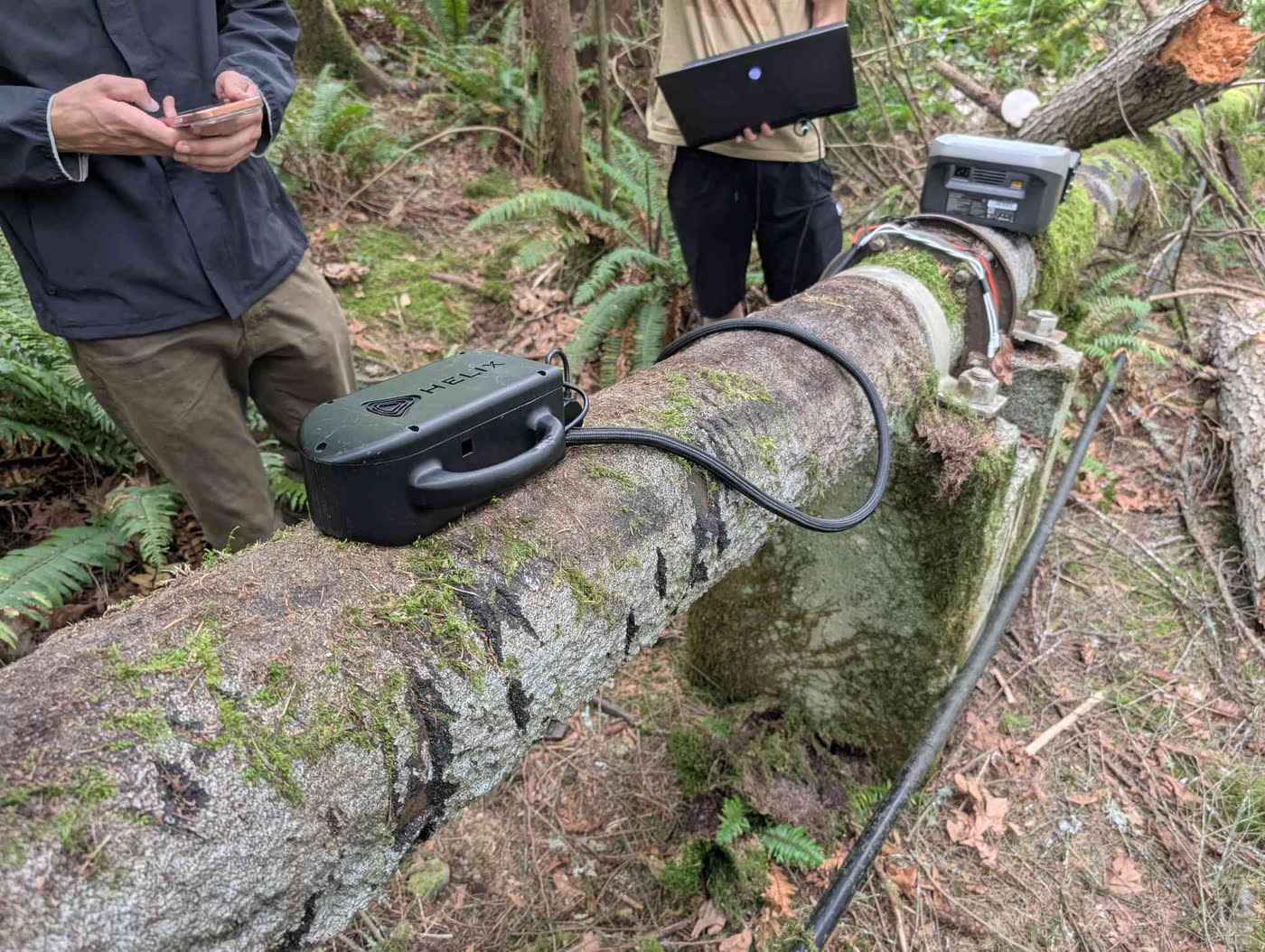
A HELIX crew screens the asset in service. Pulsed eddy current for wall response, eddy current array for surface discontinuities, and LiDAR with photogrammetry to capture the asset itself. Nothing is cut, drained or shut down.
How a visit runs
01
You point us at the assets that worry you. We walk them with your staff and review access.
02
Pulsed eddy current and eddy current array pass over the areas that matter, through the coating, while the asset stays in service.
03
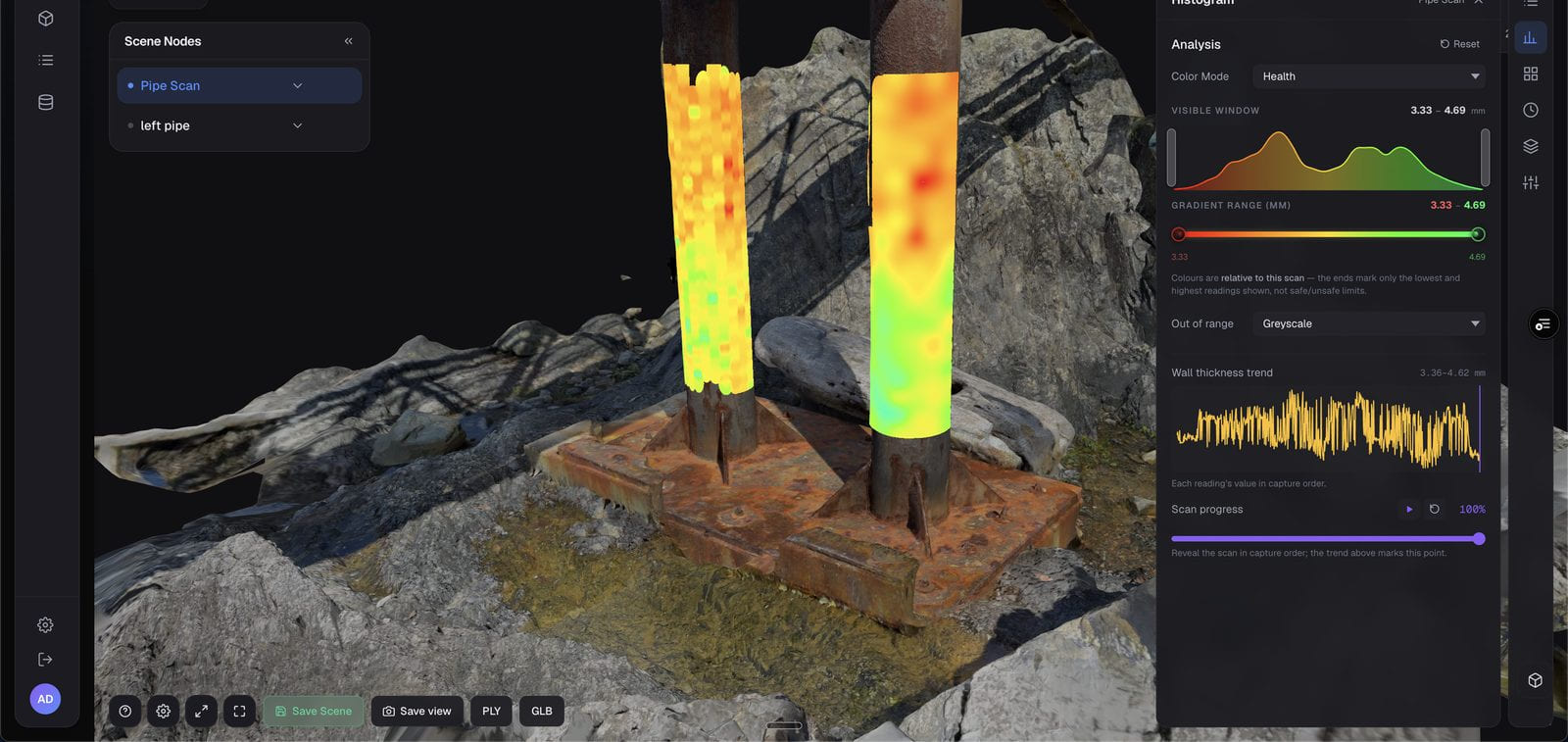
LiDAR and photogrammetry capture the asset. Every reading lands on the model in HELIX Horizon, where your team can browse it.
04
We debrief on the model: what we found, where to look closer, and which sections are worth a wrap, then quote the next step.
A plant appearing as a LiDAR point cloud
LiDAR and photogrammetry build the model the readings land on, in HELIX Horizon.
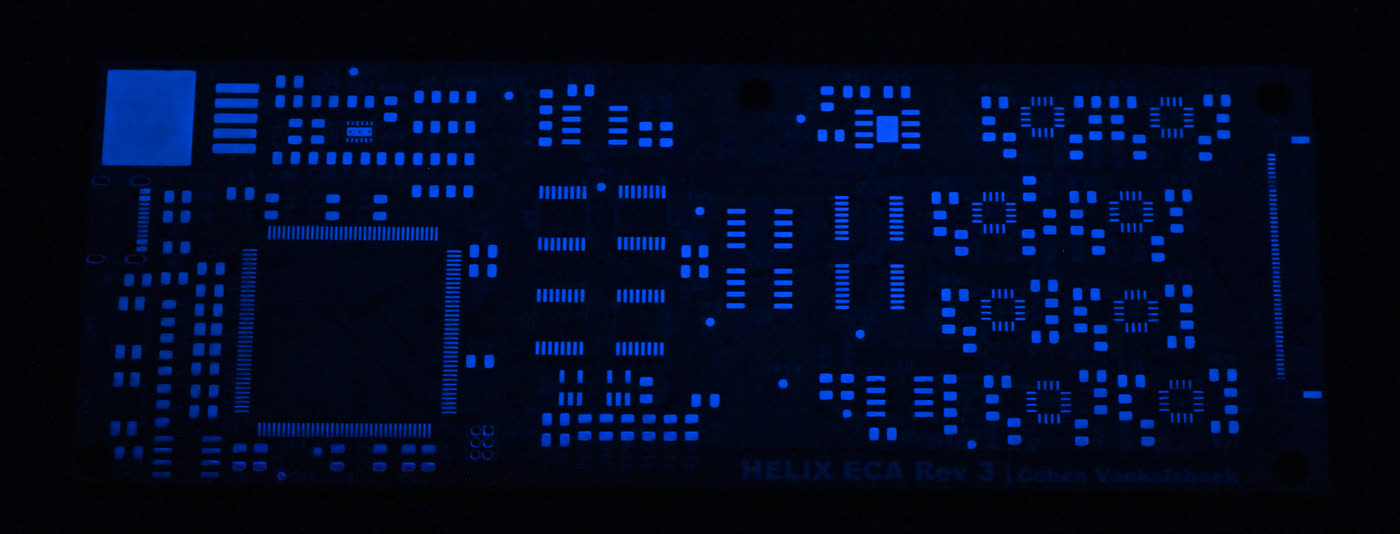
HELIX PEC reads the wall and HELIX ECA reads the surface, both through the coating with the line in service. The specifications are on each instrument's page.
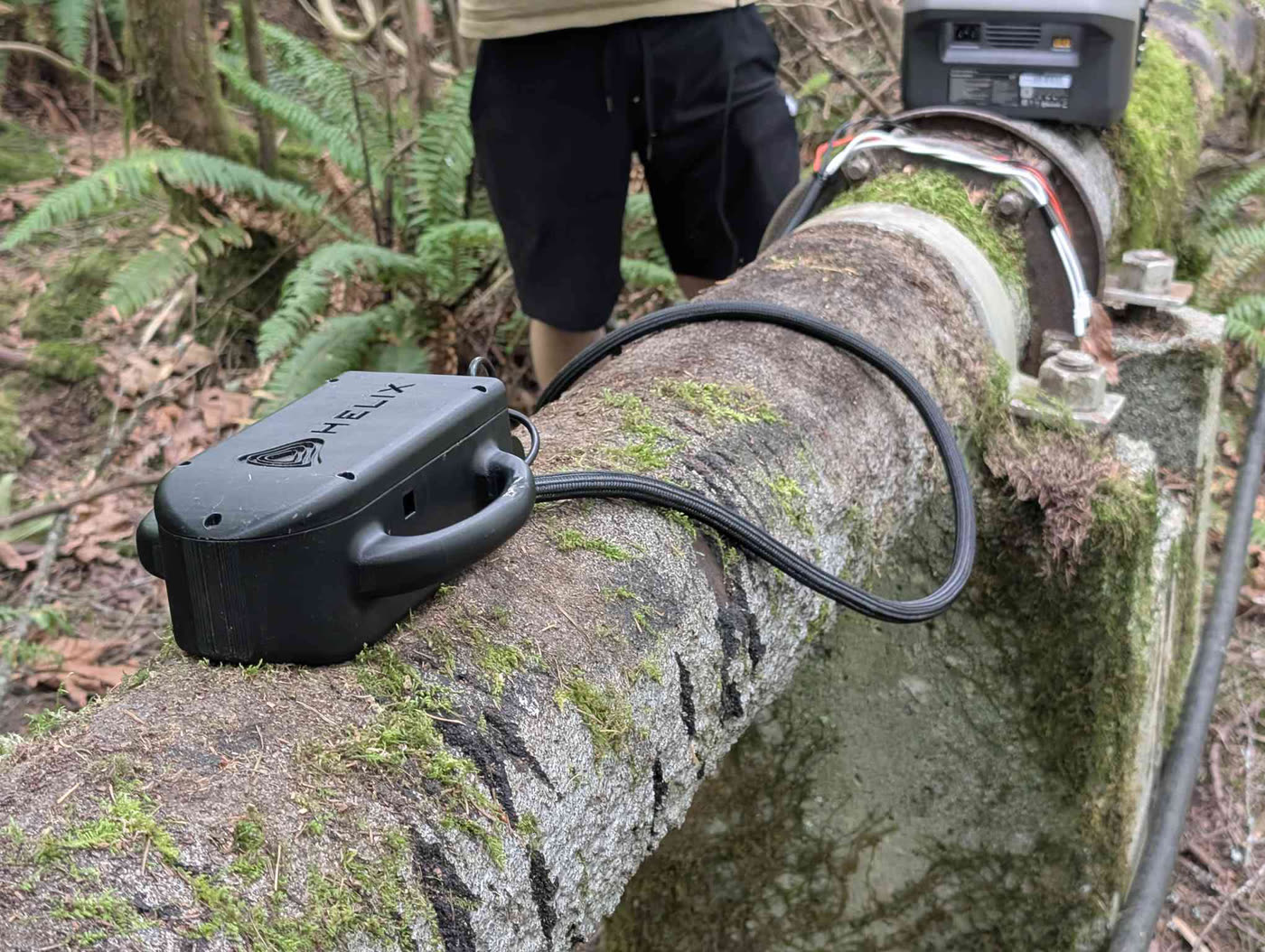
HELIX PEC on an in-service line.
What a visit includes
Pulsed eddy current (PEC) wall-response screening, through coatings and insulation, with no surface prep and no couplant
Eddy current array (ECA) screening for surface-breaking and near-surface discontinuities, through paint
LiDAR and photogrammetry capture, so every reading has a physical location
The inspection report, the processed datasets, a point-of-interest register, and a 3D model in HELIX Horizon with every result registered to it
Limits
Screening prioritises where to look next. It does not certify to any code scheme, and fitness-for-service remains a regulated engineering assessment carried out by your engineers.